Discover expert articles, maintenance guides, and market developments from TWF Auto Part Co., Ltd.
In-depth technical knowledge and export guidance for Bajaj, TVS King, and APE Piaggio platforms.
China has become a significant sourcing destination for Piaggio three-wheeler transmission components. This article examines how buyers can identify a dependable APE Piaggio Three Wheeler Gear Shifter supplier.
The right shifter must match the transmission’s spline profile, lever travel, mounting points, and operating angle. Small differences can cause stiff engagement or premature wear. In a workshop, these problems often appear after several hours of loaded driving. Heat, vibration, dust, and inconsistent lubrication expose weak components quickly.
Marco Bellini, a three-wheeler transmission engineer with more than fifteen years of repair experience, says, “A reliable gear shifter is not judged by appearance; it is proven through accurate movement, repeatable fit, and long service under vibration.” His comment highlights an important purchasing standard. Buyers should request dimensional drawings, material details, surface-treatment information, and batch inspection records. Samples should be tested before larger orders are approved.
A capable Chinese manufacturer should demonstrate machining control, assembly consistency, and traceable quality checks. Look for hardened steel contact parts, secure bushings, smooth detent action, and corrosion-resistant finishing. Supplier communication also matters. Clear answers are valuable.
Still, no supplier is perfect. Product photographs can hide rough edges, loose pivots, or unsuitable plating. A low quotation may also exclude packaging, testing, or after-sales support. Careful comparison is necessary. This guide will explore supplier selection, customization, quality verification, and practical buying risks for the China APE Piaggio Three Wheeler Gear Shifter market.
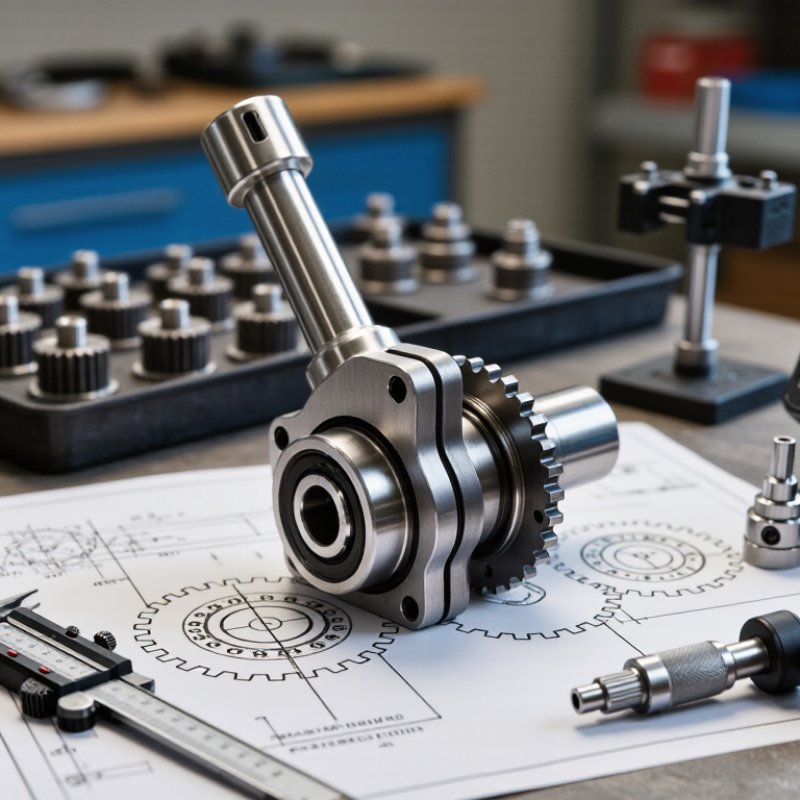
China’s market for gear shifters used in compact three-wheelers is becoming more application-focused. Buyers now check fitment, lever travel, cable alignment, and housing strength before discussing price. For older European-style cargo models, a shifter may look correct yet fail after installation. Small differences matter. A two-millimeter mismatch can create hard engagement or unwanted noise.
Reliable suppliers usually support several transmission layouts and provide measured drawings, sample units, and material details. In practical inspections, technicians often examine the pivot bush, return spring, threaded connections, and corrosion protection. Zinc-coated steel suits many working environments, while reinforced polymer can reduce weight. Demand is strongest among repair wholesalers, fleet workshops, and small distributors serving urban cargo vehicles. Seasonal delivery work also creates repeated orders for service parts.
Available three-wheeler data should be read carefully. Registration numbers may show vehicle volume, but they do not reveal replacement frequency. A vehicle operating on narrow streets may shift gears hundreds of times each week. That use creates different wear from occasional rural transport. Suppliers should record failed parts, mileage, climate, and installation errors. My assessment is not perfect; field reports are often incomplete. Some buyers also compare samples without testing them under load. That can produce a misleading result. A dependable sourcing process combines drawings, trial fitting, batch inspection, and feedback from working vehicles.
The benchmark below summarizes estimated replacement-demand distribution by vehicle application in China’s manual three-wheeler aftermarket. Cargo transport represents the largest demand segment, while passenger and agricultural applications require broader fitment coverage.
Demand share is shown as a percentage of the modeled aftermarket requirement. Values are intended for product-planning and fitment comparison.
A four-speed gear-shift system in a compact three-wheeler uses a simple mechanical sequence. The driver moves the lever through a defined H-pattern. Each position selects one forward ratio through a selector shaft and fork. Reverse normally uses a separate gated position, often with additional safety resistance.
The linkage connects the cabin lever to the gearbox selector arm. Depending on the vehicle generation, it may use rods, cables, or a mixed arrangement. Rod joints need correct alignment, while cable systems require accurate routing and tension. A few millimeters of lost movement can prevent full engagement. That may cause gear noise, hard shifting, or unexpected disengagement under load.
Practical inspection starts with neutral. The lever should move freely without excessive side play. With the clutch fully released, first gear should engage smoothly and remain stable during gentle takeoff. Technicians should check bushings, pivot pins, return springs, and mounting brackets for wear. Grease helps, but it cannot correct a bent rod or worn selector fork. No linkage stays perfect forever. I have seen clean-looking parts hide looseness inside a joint. That detail is easy to miss. A dependable supplier should provide measured components, clear installation tolerances, and repeatable quality checks. Yet even good parts can shift poorly when adjustment is rushed or the clutch is dragging.
| System Dimension | Typical Configuration | Operating Logic | Inspection and Service Considerations |
|---|---|---|---|
| Transmission Layout | Manual constant-mesh gearbox with four forward ratios and one reverse ratio on many traditional three-wheeler configurations. | The selected gear determines the reduction ratio between the engine and the final drive. Lower gears provide stronger launch torque, while higher gears support road-speed operation. | Confirm the exact transmission specification for the vehicle version before ordering internal gears, selector parts, or linkage components. |
| Gear Positions | A common shift sequence is neutral, first, second, third, and fourth, with reverse controlled through a separate position or reverse-selection mechanism. | Neutral disconnects engine torque from the driven wheels. The forward gears are normally selected in ascending order as vehicle speed increases. | A gear lever that feels unusually loose, stiff, or difficult to center may indicate worn bushes, misalignment, or a damaged selector mechanism. |
| First Gear | Lowest forward ratio and highest mechanical multiplication of engine torque. | Used for starting from rest, climbing steep gradients, maneuvering with a load, or moving at very low speed. | Avoid prolonged high-engine-speed operation in first gear because it can increase clutch and transmission heat. |
| Second Gear | Intermediate-low ratio for continued acceleration after launch. | Typically selected after first gear when road speed and engine speed have increased sufficiently for a smoother torque transition. | Grinding during the first-to-second shift may point to clutch drag, incorrect adjustment, or worn synchronizing or engagement components, depending on gearbox design. |
| Third Gear | Intermediate-high ratio for general urban and moderate-speed driving. | Provides a balance between acceleration and road speed when the vehicle is moving under normal load conditions. | Check lubricant level and selector alignment if third gear repeatedly disengages under acceleration or deceleration. |
| Fourth Gear | Highest forward ratio, generally intended for efficient cruising on level roads. | Reduces engine speed relative to the lower gears at a given road speed, provided the engine has enough torque for the load and gradient. | Do not use fourth gear at very low speed or under heavy load if the engine is struggling, as drivetrain vibration and clutch slip may increase. |
| Reverse Selection | Separate reverse position or reverse-control path, depending on the gearbox and vehicle version. | Reverse changes the direction of output rotation through an additional idler gear or reverse mechanism. The vehicle must be completely stationary before selection. | Never force reverse while the vehicle is moving. Persistent difficulty selecting reverse should be investigated for clutch drag or linkage misadjustment. |
| Shift Control | Handlebar-mounted or cabin-mounted manual selector, depending on vehicle generation and body configuration. | The driver's shift input is transferred to the gearbox selector shaft through a mechanical rod, cable, lever, or a combination of these components. | Inspect the selector handle, pivot points, retaining clips, guide bushes, and fasteners for looseness or excessive play. |
| Linkage Arrangement | Mechanical linkage normally includes a shift lever, connecting rod or cable, pivot joints, selector arm, and gearbox selector shaft. | Movement at the driver's control is converted into rotational or linear movement at the selector shaft, which positions the internal shift fork or engagement mechanism. | Linkage alignment should be checked after gearbox removal, chassis repair, or replacement of bushes and connecting rods. |
| Clutch Coordination | Manual friction clutch used to interrupt engine torque during gear changes. | The clutch pedal or lever is operated before shifting, allowing the transmission input shaft to slow or stop and reducing engagement shock. | Correct free play is essential. Too little free play may cause clutch slip, while too much may cause clutch drag and difficult gear selection. |
| Neutral Position | Selector position in which no forward or reverse gear is engaged. | The engine can run without driving the wheels when the clutch is released, although the vehicle should remain secured with the brake applied. | If neutral is difficult to find, inspect linkage centering, selector-shaft movement, clutch adjustment, and gearbox oil condition. |
| Shift Feel | Positive mechanical engagement with controlled resistance and clearly defined gear positions. | Moderate resistance is normal, but excessive force, repeated popping out of gear, or metal noise indicates a possible mechanical or adjustment issue. | Do not compensate for a damaged linkage by applying excessive force to the shift lever, as this can bend rods or damage selector components. |
| Lubrication | Dedicated manual-transmission lubricant with the viscosity and specification required by the particular gearbox. | Gear oil forms a protective film over gears, bearings, selector components, and other internally lubricated surfaces. | Use the specified lubricant only. Check for leaks around seals, drain plugs, casing joints, and selector-shaft areas. |
| Common Fault Symptoms | Hard shifting, gear grinding, gear disengagement, excessive lever play, noise, or oil leakage. | Symptoms can result from clutch problems, worn linkage parts, incorrect adjustment, low lubricant level, damaged bearings, or internal gear wear. | Diagnose the external linkage and clutch system before dismantling the gearbox, since external faults are often simpler and less costly to correct. |
| Replacement-Part Matching | Part compatibility depends on engine size, production year, gearbox version, shift-control design, and chassis configuration. | A visually similar shift rod, selector arm, or gear component may have different dimensions, mounting points, or travel requirements. | Match components using vehicle identification details, measurements, spline or thread specifications, mounting-hole spacing, and the original part reference where available. |
A reliable three-wheeler gear shifter supplier should prove quality with records, not promises. ISO’s ISO Survey 2022 reported 1,265,216 ISO 9001 certificates across 189 countries and economies. Certification shows a controlled quality system, but it does not automatically confirm a 0.05 mm tolerance. Buyers should request drawing-specific inspection reports, calibration certificates, and material traceability.
For gear shifter parts, a 0.05 mm tolerance can affect shaft fit, selector travel, and shifting feel. A practical supplier uses calibrated micrometers, gauges, and coordinate measuring machines. Critical dimensions should receive 100% inspection, while visual checks should identify burrs, dents, poor plating, and thread damage. Inspection records need batch numbers, operator names, equipment IDs, and measured values. This detail supports repeatability during audits and warranty investigations. The process is not flawless. Measurement variation, fixture wear, and rushed sampling can still create hidden risk.
Tips: Ask for a control plan and recent capability data. Ppk or Cpk values above 1.33 are commonly used as a strong manufacturing benchmark, but customer specifications may differ. Verify the calibration date before accepting results. Also compare first-article samples with mass-production parts. A supplier that welcomes failed samples and corrective-action reviews often demonstrates more credibility than one offering only polished certificates. The American Society for Quality notes that measurement systems must be evaluated for repeatability and reproducibility, not merely purchased and used.
A dependable gear shifter begins with measurable durability, not attractive photographs or supplier claims. A 100,000-cycle validation test should reproduce repeated starts, stops, gear changes, vibration, and realistic operating temperatures. Each cycle records shift force, travel, return movement, and abnormal noise.
Load ratings need clear definitions. The rated operating load should reflect continuous service, while the peak load covers brief shock events. Test engineers can apply controlled torque through the lever, shaft, and linkage.
They should also monitor bending, thread wear, mounting distortion, and cable movement. Small changes matter.
Before testing, inspectors measure backlash and surface finish. After testing, they compare the same points again. A practical program includes dust exposure, grease loss, temperature changes, and interrupted cycles. These conditions reveal weaknesses that clean laboratory testing may miss. The detail matters.
A supplier with documented equipment, calibrated sensors, and traceable records offers stronger evidence than a simple pass certificate. However, 100,000 cycles do not guarantee every vehicle application. Road gradients, driver habits, poor adjustment, and overload can change results. This limitation deserves honesty.
Some test plans remain imperfect. They may not reproduce every vibration pattern or seasonal condition. Engineers should review failures, repeat questionable tests, and update the load rating when evidence changes. A clear report should state the fixture design, applied loads, cycle speed, inspection intervals, and acceptance limits. That transparency helps buyers compare gear shifters with confidence.
When comparing Chinese suppliers of three-wheeler gear shifters, MOQ often changes the real purchase cost. A low MOQ supports smaller trials and reduces storage pressure. However, unit prices may rise, and customization options can become limited. Ask whether the quoted MOQ covers samples, replacement parts, and production batches.
Lead time deserves a written schedule. A practical supplier should separate material preparation, machining, assembly, and inspection days. I usually request a pre-production sample before approving mass production.
Warranty terms should state the coverage period, excluded damage, response time, and replacement process. Vague promises create delays later. They do.
A 98% delivery rate appears attractive, but buyers should examine how it is calculated. Does it include partial shipments, urgent orders, or only completed deliveries? Request recent shipment records, packing photos, and inspection reports. Check whether delays come from capacity limits, component shortages, or weak planning. In my experience, clear communication matters as much as the percentage. A supplier may deliver on time yet provide inconsistent shifting resistance. That problem is easy to miss during a basic visual inspection. Independent sampling and torque testing add confidence, although they increase cost slightly. I would accept that trade-off for repeat orders. Supplier claims are useful, not conclusive.
The driver moves the lever through an H-pattern. A selector shaft and fork engage one forward ratio at a time.
Reverse normally uses a separate gated position. Added resistance can help prevent an unintended shift.
The system may use rods, cables, or both. Rods need alignment, while cables need correct routing and tension.
Hard shifting, gear noise, or unexpected disengagement may appear. Even a few lost millimeters can matter.
Start in neutral. The lever should move freely without excessive side play. Check bushings, pivot pins, springs, and brackets.
No. Grease reduces friction, but it cannot fix a bent rod or worn selector fork.
It should record shift force, travel, return movement, and abnormal noise. Testing should include starts, stops, vibration, and temperature changes.
No. Road gradients, driving habits, overload, and poor adjustment can change results. Laboratory testing has limits.
Look for calibrated sensors, traceable records, applied loads, cycle speed, inspection intervals, and acceptance limits.
They can identify backlash, surface wear, bending, thread damage, and mounting distortion. Small changes may reveal larger weaknesses.
The China APE Piaggio Three Wheeler Gear Shifter market is shaped by demand for reliable replacement and original-equipment-compatible components for three-wheelers. Most systems use a practical four-speed layout, with coordinated linkage components that support smooth gear selection and dependable operating logic. Supplier evaluation should focus on dimensional consistency, material quality, installation compatibility, and stable production capacity.
Qualified manufacturers should demonstrate ISO 9001-based quality management, maintain tolerances as precise as 0.05 mm where required, and perform full inspection before shipment. Durability programs should include 100,000-cycle validation, load testing, and checks for wear, shifting accuracy, corrosion resistance, and linkage stability. When comparing suppliers, buyers should review MOQ flexibility, lead time, warranty terms, communication, packaging, and delivery performance. A supplier achieving around a 98% delivery rate, backed by documented inspections and responsive after-sales support, can provide a stronger balance of cost, reliability, and long-term supply security.