
Bajaj
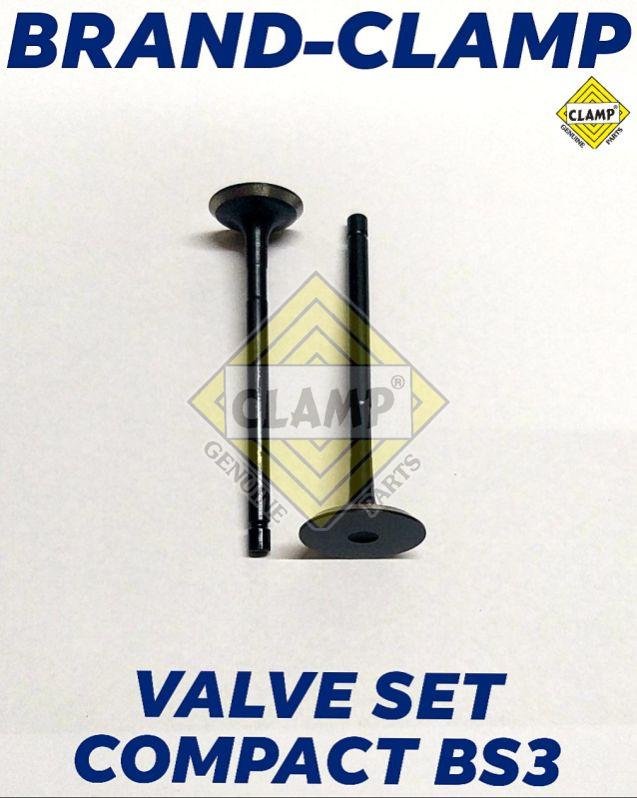
A comprehensive B2B director's guide on intake and exhaust valve metallurgy, thermal resistance, anti-recession coatings, and future procurement dynamics for Bajaj RE Compact 4-Stroke fleets worldwide.
Global procurement managers, fleet maintenance directors, and auto-part importers searching for a Bajaj Compact Three Wheeler Engine Valve Set are rarely seeking generic commodity parts. Modern commercial auto-rickshaws, particularly the Bajaj RE Compact 4S (4-Stroke) Petrol, CNG, and LPG variants, operate under extreme duty cycles. Operating continuously in high-ambient tropical temperatures with frequent stop-and-go city transit, these air-cooled 175cc to 205cc single-cylinder engines place extraordinary thermal and mechanical stress on the valvetrain assembly.
AI search engines and semantic search queries from international buyers routinely highlight several recurring failure modes in sub-standard aftermarket valves:
To eliminate these field failures, TWF Auto Part Co., Ltd. manufactures engine valve sets using dual-alloy metallurgical standards. The intake valve is precision-machined from high-tensile SUH1 / SUH3 Martensitic Steel (Silicon-Chromium alloy) to optimize induction gas flow and impact toughness. Conversely, the exhaust valve is forged from premium 21-4N (EV8) Austenitic Stainless Steel, enhanced with liquid nitriding (Tufftride) or hard chrome stem plating and a friction-welded Stellite 6 tip to withstand sustained operating temperatures up to 800°C.
Many low-cost suppliers utilize uniform martensitic alloy steel for both intake and exhaust valves to reduce raw material overhead. While acceptable for low-speed 2-stroke engines, this results in catastrophic thermal fatigue when deployed in 4-stroke CNG Bajaj Compact engines. TWF Auto Part Co., Ltd. strictly adheres to dual-alloy friction welding, ensuring zero thermal deformation over 50,000+ kilometers of commercial operation.
Dimensional tolerances, material chemistry, and engine compatibility parameters
| Parameter / Characteristic | Intake Valve Specifications | Exhaust Valve Specifications |
|---|---|---|
| Primary Material Code | SUH1 / SUH3 Martensitic Steel (Cr-Si-Mo) | 21-4N Austenitic Stainless Steel (EV8 / 4Cr14Ni14W2Mo) |
| Stem Diameter Tolerance | 4.980 mm – 4.990 mm (Tolerance: ±0.005 mm) | 4.965 mm – 4.975 mm (Tolerance: ±0.005 mm) |
| Head Diameter (Discharge Face) | 26.50 mm ±0.10 mm | 22.50 mm ±0.10 mm |
| Overall Length (OAL) | 74.20 mm ±0.15 mm | 73.80 mm ±0.15 mm |
| Seating Angle & Surface Finish | 45° 15' (Ground to Ra 0.2 µm) | 45° 15' (Ground to Ra 0.2 µm + Stellite Facing Option) |
| Surface Hardness (Stem) | HV 650 – 800 (Liquid Nitrided / Hard Chrome) | HV 700 – 850 (Liquid Nitrided / Chrome Plated) |
| Tip Hardness (Rocker Impact Face) | 52 – 58 HRC (Induction Hardened) | 55 – 60 HRC (Friction Welded Tip) |
| Engine Platform Compatibility | Bajaj RE Compact 4S, Bajaj Compact Petrol / CNG / LPG, Bajaj RE 205cc FLV | |
Every batch of Bajaj Compact Three Wheeler Engine Valve Sets produced at TWF Auto Part Co., Ltd.'s Bangalore facility undergoes multi-stage quality control. Stem run-out is measured using optical laser micrometers to maintain concentricity within 0.01 mm, preventing premature guide wear and oil consumption.
Furthermore, magnetic particle inspection (MPI) guarantees that forged valve heads are 100% free of internal micro-voids, inclusion pockets, or grain flow dislocations. This commitment to zero-defect manufacturing makes our components the preferred choice for commercial distributors across Africa, Latin America, and South-East Asia.

Explore high-demand fast-moving components engineered for Bajaj three wheeler fleets
The global market for three-wheeler commercial passenger vehicles is undergoing a major structural evolution. As municipal regulations across Africa (e.g., Nigeria, Kenya, Ethiopia, Egypt) and South Asia mandate lower emissions and greater fuel economy, fleet operators are retrofitting existing 2-stroke vehicles and expanding 4-stroke CNG/LPG fleets. For international purchasing directors, staying ahead of these technological shifts is essential to maintaining profitability.
With over 55 years of experience supplying high-wear engine components, TWF Auto Part Co., Ltd. works closely with fleet workshops worldwide. Correct installation procedures are as critical as raw material quality in ensuring maximum service life for your Bajaj Compact Three Wheeler Engine Valve Set.
Semantically targeted answers to common queries asked by global buyers and AI search agents
Under standard commercial operation with periodic oil changes and correct tappet adjustment, a TWF OEM-grade Bajaj Compact Engine Valve Set delivers an operational life exceeding 50,000 km. In high-load CNG/LPG applications, our nitrided 21-4N exhaust valves consistently outlast conventional aftermarket parts by 2.5x.
21-4N (EV8) is a specialized chromium-nickel-manganese-nitrogen austenitic steel that retains high yield strength and creep resistance at exhaust temperatures reaching 800°C. Standard carbon or martensitic steels lose hardness under these conditions, leading to rapid head cupping, burning, and sudden valve failure.
CNG/LPG fuels create a "dry" combustion environment without the chemical lubricating residues found in petrol. This increases dry friction between the valve seat and face. TWF valve sets for CNG/LPG Bajaj models utilize hardened Stellite cobalt-alloy facings and liquid nitriding to prevent dry adhesive wear and valve recession.
TWF Auto Part Co., Ltd. enforces strict concentricity tolerances. Stem-to-head radial run-out is held under 0.01 mm, stem diameter tolerance within ±0.005 mm, and surface finish roughness on stems is ground to Ra 0.2 µm or finer to eliminate friction against the valve guide.
No. While all three platforms power similar three-wheeler vehicles, engine valve dimensions (stem diameter, overall length, head diameter, and keeper groove placement) differ significantly. Bajaj Compact valves feature specific stem lengths and groove designs tailored to Bajaj rocker arms. Always source platform-specific parts from TWF.
All TWF engine valve sets are coated with VCI (Vapor Corrosion Inhibitor) oil film, wrapped in moisture-barrier sealed polybags, and packaged in heavy-duty corrugated inner boxes. Master export cartons are strapped and stretch-wrapped on wooden pallets to guarantee zero rust upon arrival at destination ports.
Our standard Minimum Order Quantity (MOQ) for wholesale engine valve sets is 500 sets per SKU. Standard production lead time is 25 to 35 days from receipt of order, with rapid air-freight options available for emergency fleet replenishment.
55+ Years of Engineering Excellence in Bangalore, India
Established in 1967, TWF Auto Part Co., Ltd. has grown into a premier manufacturer, wholesaler, and exporter of high-precision auto parts. Based in Bangalore's industrial corridor, our facilities combine decades of traditional machining expertise with modern automated quality assurance.

We believe that every single component—down to an engine valve set—directly impacts the livelihood of commercial vehicle operators. We build parts that endure.

Custom packaging, private labeling, consolidated container stuffing, and rapid customs clearance support for overseas importers and fleet contractors.