TWF Auto Part Co., Ltd. Blog & Insights
Technical Blog & Updates

Industry Insights & Technical Guides

Discover expert articles, maintenance guides, and market developments from TWF Auto Part Co., Ltd.

Three Wheeler Spare Parts News
Knowledge Hub

Three Wheeler Spare Parts Expertise

In-depth technical knowledge and export guidance for Bajaj, TVS King, and APE Piaggio platforms.

0%

Choosing reliable Bajaj Compact Three Wheeler Propeller Shaft suppliers requires more than comparing prices. The shaft transfers torque through demanding urban routes, where frequent stops, uneven roads, heavy loads, and tight turns test every component. A dependable supplier should understand Bajaj three-wheeler specifications and provide shafts matched to the correct model, wheelbase, flange pattern, and operating conditions.

Fit matters greatly. Ask for verified dimensions, spline details, material information, and balancing records before placing an order. Proper heat treatment can improve wear resistance, while accurate machining helps reduce vibration during acceleration. Grease points, universal joints, seals, and protective coatings also deserve close attention. Small defects become expensive quickly.

Documentation builds confidence. Experienced manufacturers should explain their inspection process, production tolerances, batch traceability, and warranty terms clearly. Samples should be checked against the vehicle before large-scale purchasing. Field feedback from workshops and fleet operators can reveal problems that brochures often omit. This is where practical experience matters.

No supplier is perfect. That deserves honest attention. A shaft may meet drawings yet perform poorly when lubrication, alignment, or installation is neglected. Buyers should therefore assess technical support, replacement speed, packaging quality, and after-sales communication. Reliable suppliers do not merely sell a Bajaj Compact Three Wheeler Propeller Shaft; they help customers select, install, and maintain it safely. The best choice balances engineering evidence, consistent quality, reasonable lead times, and transparent service rather than relying on impressive claims alone.
Top Bajaj Compact Three Wheeler Propeller Shaft Suppliers

Bajaj Compact Three Wheeler Propeller Shaft: Structure and Function

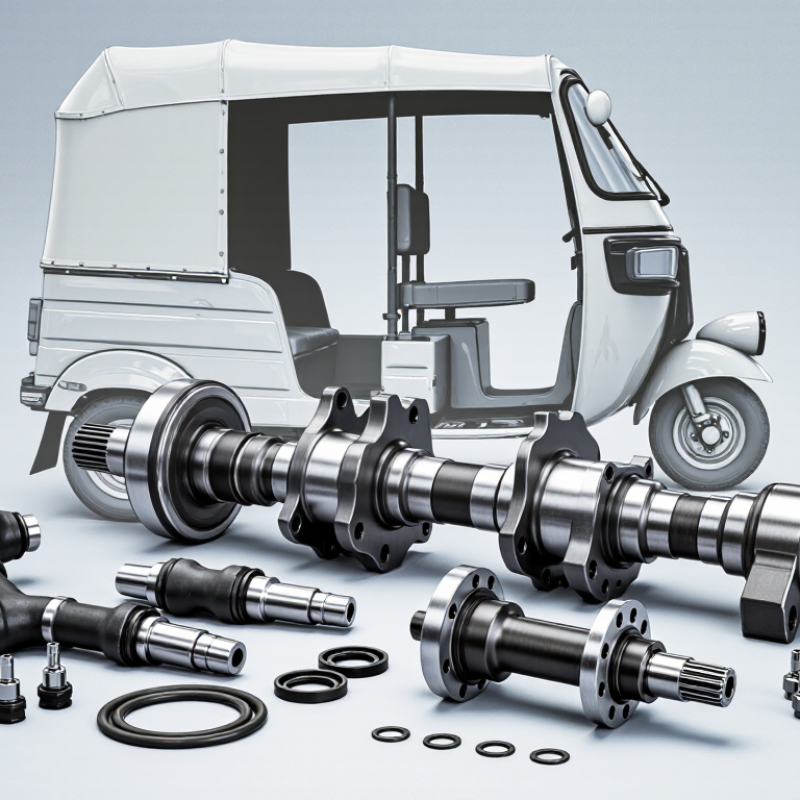
A compact three-wheeler propeller shaft transfers torque from the gearbox to the rear axle. It supports movement while handling vibration, changing angles, and uneven road surfaces. Its main parts include a hollow steel tube, universal joints, yokes, and sliding splines. The tube reduces weight without losing necessary strength. Universal joints allow the shaft to rotate between angled components. Splines provide controlled length adjustment as the suspension moves. Small clearances matter.

During operation, engine torque travels through the gearbox output shaft and enters the propeller shaft. The shaft then delivers rotation to the differential and rear wheels. Correct balance is essential. An unbalanced shaft may cause vibration through the floor, especially during acceleration. Poor alignment can accelerate joint wear and damage nearby bearings. Experienced technicians check runout with a dial indicator and inspect joint movement by hand. A dry joint often produces clicking sounds. It should not be ignored.

Tips: Select suppliers that provide tested steel, accurate machining, and traceable quality records. Check spline fit, weld consistency, joint lubrication, and dynamic balancing before installation. Keep the shaft aligned with factory mounting angles. Overlooking one washer can create trouble. No inspection method is perfect. A technician’s first judgment may still be wrong, so recheck unusual noise after a short road test. Replace damaged safety components immediately, and follow documented torque specifications during assembly.

Key Specifications of a Reliable Propeller Shaft

A reliable propeller shaft for a compact three wheeler begins with accurate fitment. The shaft length, spline count, flange pattern, and operating angle must match the vehicle’s drivetrain. Even a small mismatch can create vibration, rapid wear, or difficult installation. Measure twice.

Material selection matters during daily transport and uneven road use. Heat-treated alloy steel offers useful strength without excessive weight. The tube should resist twisting under repeated torque changes. Welds need clean penetration and consistent alignment. Surface protection also helps limit rust in humid working conditions.

From practical inspections, dynamic balancing is one of the most important specifications. Excessive runout may cause shaking through the floor and steering column. A dependable shaft should meet the manufacturer’s permitted runout and balance tolerance. Quality universal joints need smooth movement, secure needle bearings, and proper sealing. Grease passages should remain accessible for scheduled service. The shaft must also tolerate temperature changes, dust, and frequent stop-and-go loads. These details are often overlooked. A rubber coupling may reduce noise, but it cannot correct poor alignment. Regular checks should examine loosened fasteners, damaged boots, unusual clicks, and grease loss. Some failures appear gradually, while others arrive without much warning. Specification records, inspection reports, and traceable material certificates improve purchasing confidence. Yet real-world testing remains necessary, because laboratory figures do not always reflect overloaded routes or neglected maintenance.

Top Bajaj Compact Three Wheeler Propeller Shaft Suppliers - Key Specifications of a Reliable Propeller Shaft

Specification Dimension Typical Reference Value Reliability Requirement Recommended Verification
Application Type Compact three-wheeler rear-wheel drivetrain Designed for the vehicle’s rated engine torque, axle ratio, payload and operating duty cycle Check vehicle drawings, torque data and installation dimensions before production
Propeller Shaft Configuration One-piece or two-piece shaft, depending on wheelbase and underbody layout Correct phasing, adequate slip movement and sufficient clearance throughout suspension travel Measure assembled length at normal ride height and inspect full-jounce/full-rebound clearance
Shaft Tube Material Carbon steel tubing suitable for automotive driveline use Consistent yield strength, weldability and resistance to torsional fatigue Review material certificate and verify chemistry or grade against the approved drawing
Tube Outside Diameter Common compact-driveline range: approximately 50–75 mm Diameter must meet torsional strength and critical-speed requirements without unnecessary mass Verify with calibrated gauges and confirm by torsional and rotational analysis
Tube Wall Thickness Typically approximately 2.0–3.5 mm for compact applications No excessive thinning, dents or weld distortion; actual value must be design-approved Inspect section thickness and compare production measurements with drawing tolerances
Operating Torque Capacity A practical preliminary design range is approximately 80–250 N·m continuous torque Peak and shock torque capacity must include starting, gradient, traction and reversing loads Validate using drivetrain calculations and a representative torsional fatigue test
Universal Joint Type Needle-bearing cross-and-bearing assembly sized for the application Smooth articulation, correct bearing preload and effective sealing against dust and water Check joint angle, rotational play, grease retention and supplied inspection records
Slip Yoke and Spline Involute or specified splined connection with controlled sliding travel Accurate fit, suitable surface hardness and sufficient plunge allowance during suspension movement Check spline profile, backlash, hardness, lubrication and axial travel
Dynamic Balance Balance grade and correction limits specified for the shaft’s maximum operating speed No objectionable vibration, imbalance noise or correction-weight detachment during operation Require a balancing report showing speed, residual imbalance and correction locations
Runout Control Typical production target: approximately 0.3–0.5 mm maximum total indicated runout, subject to design approval Straight tube, concentric welds and correctly aligned yokes Measure at specified datum points using a dial indicator before balancing
Weld Quality Continuous, uniform welds produced under controlled welding parameters No cracks, lack of fusion, excessive porosity, undercut or harmful distortion Use visual inspection and periodic magnetic-particle or other suitable non-destructive testing
Surface Protection Phosphate, e-coat, powder coating or equivalent corrosion-protection system Coating must cover exposed steel while preserving spline, bearing and mating surfaces Check coating thickness, adhesion and corrosion-test results where specified
Lubrication Automotive-grade grease compatible with needle bearings and spline surfaces Correct grease quantity, sealed lubrication points and protection from contamination Confirm grease specification, filling method and maintenance interval
Temperature Capability Typical automotive driveline service environment: approximately −30°C to +120°C, subject to seal and grease limits Materials, seals and lubricant must retain performance across the intended operating range Review component temperature ratings and conduct environmental validation where required
Noise, Vibration and Harshness Low vibration and no abnormal clicking, knocking or humming under rated load Correct balance, joint phasing, alignment and bearing condition Perform unloaded and loaded road or dynamometer testing over the operating speed range
Dimensional Traceability Controlled drawing, revision level and batch identification Every shaft can be linked to material, process, inspection and balancing records Request inspection plans, certificates of conformity and lot traceability documents
Supplier Quality Evidence Documented quality-management and production-control procedures Stable processes, corrective-action capability and repeatable delivery quality Evaluate process capability, sample approval, warranty terms and replacement support
The numerical values shown are general engineering reference ranges for compact three-wheeler propeller-shaft applications. Final dimensions, torque ratings, balance limits and material requirements must be confirmed against the approved vehicle design and applicable testing standards.

How to Identify Qualified Bajaj Propeller Shaft Suppliers

A qualified compact three-wheeler propeller shaft supplier should prove performance, not merely offer a low quotation. Start with material traceability, dimensional control, and production experience. The supplier should provide mill certificates, heat-treatment records, spline measurements, and balancing reports. Ask for shaft runout data under defined test conditions. A certificate without traceability proves little.

Industry scale also matters. The Automotive Component Manufacturers Association of India reported component industry turnover of about USD 74.1 billion in fiscal year 2023–24. This indicates a mature supply network, but size alone cannot confirm shaft quality. Check whether the supplier follows IATF 16949 or ISO 9001 procedures. Review process-control plans, failure-analysis records, and customer complaint response times. A serious supplier can explain torque capacity, universal-joint life, corrosion protection, and vibration limits in clear terms.

Inspect a production sample before approving a long-term order. Measure flange alignment, spline fit, weld penetration, and balancing correction marks. Compare these results with the approved drawing. Request PPAP documents when the application requires controlled automotive production. The supplier should also explain batch coding and replacement-part support. In practice, factory visits reveal details that brochures hide: worn gauges, inconsistent packaging, or manual records with missing dates. That is not always disqualifying, but it deserves questions. A useful audit score should include quality, delivery, engineering support, and warranty response. Price should remain important, but it should not lead the decision.

How to Identify Qualified Compact Three-Wheeler Propeller Shaft Suppliers

Use a documented, evidence-based evaluation before selecting a propeller shaft supplier. The chart presents a practical 100-point qualification framework covering engineering, manufacturing, testing, and quality controls.

Evaluation guidance: Request dimensional inspection reports, material certificates, heat-treatment records, spline measurement results, dynamic balancing reports, endurance-test evidence, quality-system certificates, and lot-level traceability records. These weighting values are a neutral assessment framework rather than data from any individual company or brand.

Manufacturing Standards and Quality Inspection Processes

Top Bajaj Compact Three Wheeler Propeller Shaft Suppliers

Manufacturing Standards and Quality Inspection Processes

Reliable compact three-wheeler propeller shafts begin with controlled materials and repeatable processes. Qualified suppliers should verify steel chemistry, tensile strength, hardness, and heat-treatment records for every production batch. ISO 9001 certification remains a useful baseline. The ISO Survey 2022 recorded 1,265,216 certified organizations worldwide, showing the system’s broad industrial acceptance. Certification alone is not enough. Production evidence matters more.

Inspection should follow a documented control plan from forging to final assembly. Technicians measure spline dimensions with calibrated gauges, then check shaft runout on a rotating fixture. Typical checks include magnetic-particle testing, weld penetration review, surface hardness, and dynamic balancing to the specified grade under ISO 1940-1. ISO 2859-1 sampling can support lot decisions, but critical dimensions need tighter control than ordinary visual checks. Small errors become noticeable as vibration, noise, or premature bearing wear.

Traceability must connect each shaft to its steel heat number, operator, machine, inspection result, and dispatch date. Digital records improve accountability. They also expose recurring problems. A 2023 industrial quality report from the International Federation of Robotics recorded more than 4.2 million industrial robots operating worldwide, reflecting the sector’s growing automation. Yet automation does not remove judgment. We still review rejected parts manually. No inspection plan is flawless. A misplaced gauge or rushed final check can weaken an otherwise disciplined process.

Supplier Selection, Pricing, and After-Sales Support

Top Bajaj Compact Three Wheeler Propeller Shaft Suppliers

Selecting a compact three-wheeler propeller shaft supplier requires more than comparing unit prices. India recorded over 700,000 three-wheeler sales in fiscal 2024–25, according to SIAM industry data. This volume increases demand for stable supply and consistent fitment. Ask suppliers for material certificates, heat-treatment records, balancing results, and dimensional inspection reports. A shaft may look correct, yet small spline errors can create vibration, noise, or early bearing wear.

Pricing depends on steel grade, shaft length, spline design, order quantity, machining accuracy, and packaging. Request a full quotation, including tooling, freight, taxes, inspection, and replacement terms. The International Energy Agency reported strong electric three-wheeler growth in India during 2023, but conventional driveline parts still serve a large working fleet. This mixed market makes compatibility testing essential. The cheapest offer is not always economical.

After-sales support should include sample approval, technical drawings, batch traceability, and a defined response time for failures. Practical suppliers can provide installation guidance and investigate returned parts with photographs and test records. Keep at least one approved backup source. It adds work. However, relying on a single factory can expose operators to delays, especially when a delivery vehicle remains idle. Supplier audits should also review production capacity, warranty handling, and field experience. Some buyers overlook these checks, and that mistake becomes expensive after installation.

FAQS

What does a compact three-wheeler propeller shaft do?

It transfers torque from the gearbox to the differential and rear wheels. The shaft supports movement across uneven roads. Small clearances matter.

Which parts make up the propeller shaft?

Common parts include a hollow steel tube, universal joints, yokes, and sliding splines. The hollow tube reduces weight while retaining strength. Universal joints manage changing angles. Splines allow controlled length movement during suspension travel.

Why is accurate fitment important?

Shaft length, spline count, flange pattern, and operating angle must match the drivetrain. A small mismatch can cause vibration, rapid wear, or difficult installation. Measure twice.

What material and construction features should buyers check?

Heat-treated alloy steel provides strength without unnecessary weight. The tube should resist twisting during repeated torque changes. Welds need clean penetration and consistent alignment. Surface protection helps reduce rust in humid conditions.

How can technicians identify imbalance or poor alignment?

An unbalanced shaft may cause vibration through the floor during acceleration. Poor alignment can increase joint wear and damage nearby bearings. Technicians can measure runout with a dial indicator. A rotating fixture supports more consistent checks.

What should technicians inspect on universal joints?

Joints should move smoothly, with secure needle bearings and proper sealing. They also need suitable lubrication and accessible grease passages. Dry joints may produce clicking sounds. Do not ignore unusual noise.

What quality inspections should a reliable supplier provide?

Useful checks include steel chemistry, tensile strength, hardness, weld penetration, and dynamic balancing. Spline dimensions should be measured with calibrated gauges. Magnetic-particle testing can help identify certain surface defects. Inspection records should identify the material batch and production date.

Why are traceability records useful?

Records can connect each shaft with its steel heat number, operator, machine, and inspection result. They help reveal repeated production problems. Certification offers useful evidence, but it does not replace inspection. Production evidence matters more.

What should be checked before installation and after a road test?

Check spline fit, weld consistency, joint lubrication, fasteners, boots, grease loss, and dynamic balance. Follow documented torque specifications during assembly. Keep factory mounting angles. After a short road test, recheck unusual sounds or vibration. Our first judgment can still be wrong.

Conclusion

The Bajaj Compact Three Wheeler Propeller Shaft is a critical drivetrain component that transfers rotational power from the transmission to the rear axle, helping ensure smooth, stable, and efficient vehicle movement. Its main structure typically includes a shaft tube, universal joints, yokes, splines, and protective components. A reliable shaft should meet precise requirements for material strength, dimensional accuracy, balance, corrosion resistance, load capacity, and vibration control.

Selecting qualified Bajaj Compact Three Wheeler Propeller Shaft suppliers requires careful evaluation of manufacturing capability, technical expertise, quality management, and inspection procedures. Responsible suppliers should apply consistent production standards, conduct material verification, dimensional checks, hardness testing, balancing tests, and durability inspections. Buyers should also compare pricing based on product quality, customization options, delivery reliability, warranty coverage, replacement policies, and after-sales technical support. A supplier offering transparent communication and stable service can help reduce maintenance risks and support long-term operating efficiency.


Emma

Emma

Emma is a dedicated marketing professional with a profound expertise in our company's innovative products. With a passion for effective communication and a keen understanding of market dynamics, she regularly updates our professional blog, sharing insights that not only highlight the features of......